
Komodo with Kids: An Honest Family Planning Guide
Plan a Komodo family trip around child-size safety equipment, transfers, cabins, supervision and a realistic daily schedule.
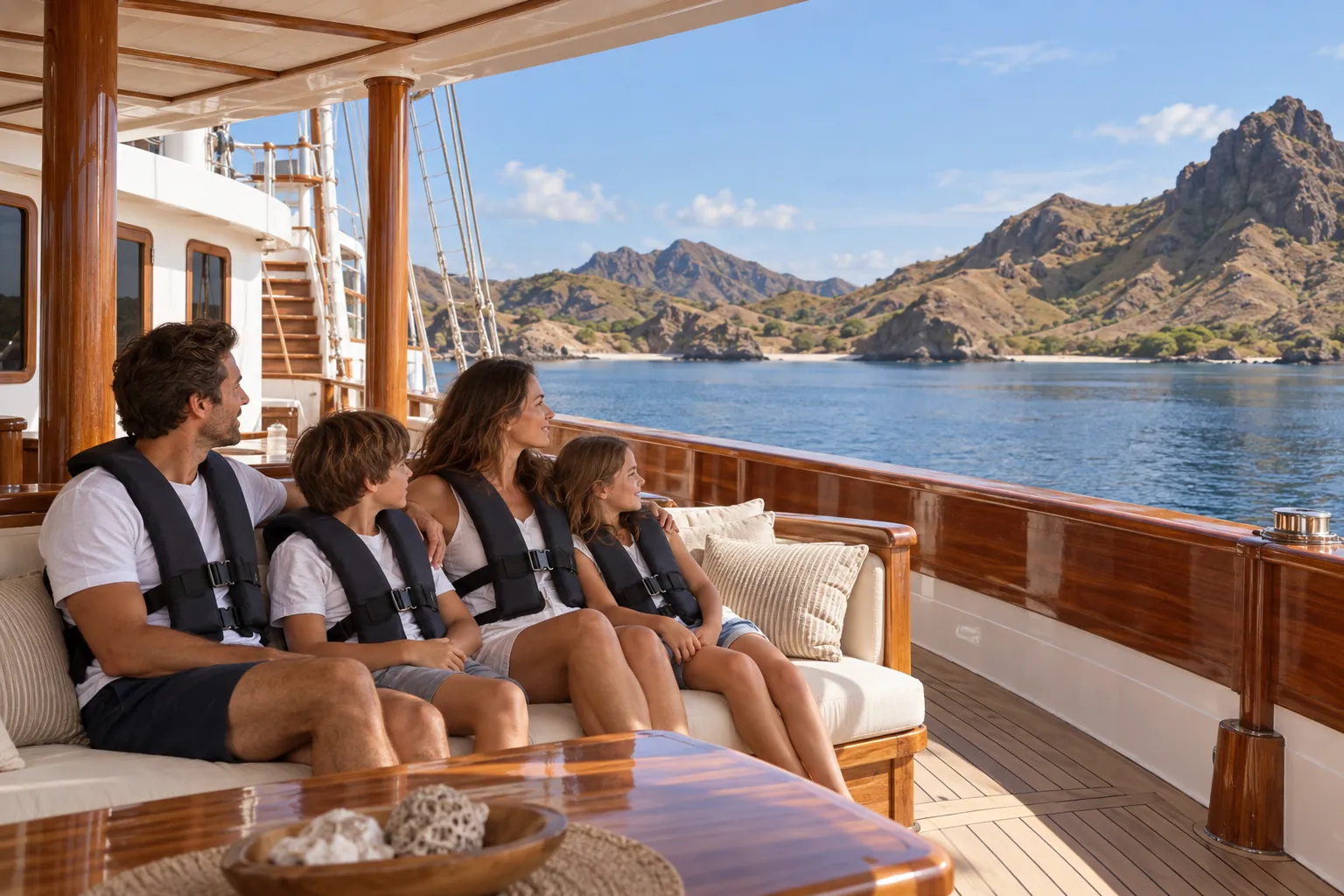
A Komodo trip can suit families when the boat, supervision, transfers and daily activities fit the individual child. There is no universal age at which every itinerary becomes suitable. Confirm the operator’s minimum age, correctly sized lifejackets, cabin arrangement and emergency plan before booking. A private charter can offer more flexibility, but weather, park access and the captain’s decisions still set limits.
Start with the practical demands of a boat holiday: moving between vessels, exposed trails, time away from shore services and close supervision around water. For the wider destination, see our Komodo National Park guide. This article focuses on decisions that change when children travel with you.
What makes a family trip demanding?
Early starts and heat. A sunrise itinerary can mean waking before dawn, boarding a tender in low light and climbing before breakfast. Ask whether your family can skip an activity and where you would wait safely. Trails may have long exposed sections; check shade and rest opportunities instead of assuming they are available.
Transfers. Boarding arrangements differ between vessels and landing sites. Ask how children move between the main boat, tender and shore, who assists, and when transfers are cancelled. Crew assistance does not replace a parent’s supervision.
Time offshore. Returning to a hotel or obtaining medical care may take time. Obtain the operator’s communication, first-aid and evacuation plan for the actual route. A larger or more expensive vessel does not remove these constraints.
Rest between stops. Leave room for meals, sleep and quiet activities. A longer itinerary can add flexibility, but also adds nights aboard. Choose the number of days your child is likely to enjoy, using our trip duration guide.
Assess readiness, not only age
| Planning question | What to confirm |
|---|---|
| Infants and very young children | Operator acceptance, properly sized safety equipment, safe sleeping arrangements, feeding needs and realistic access to care. |
| Children needing hands-on help | An adult available for direct supervision during boarding, on deck, ashore and near water. |
| Confident swimmers | Open-water confidence and the day’s conditions; pool ability does not establish readiness for current, waves or boat exits. |
| Older children and teenagers | Willingness to follow the guide, stay with the group and decline activities beyond their ability. |
Do not treat a birthday as clearance for a hike or snorkel. Ask the operator about restrictions for each activity and discuss relevant health needs with your child’s clinician before travel.
Private charter or shared departure?
A komodo private charter gives your party more influence over the proposed schedule, meals and pace. Confirm what can actually change: permits, weather, safe anchorages, crew hours and other operational limits still apply.
A shared trip can work when the advertised schedule and cabin arrangement already suit your family. Ask about minimum ages, other guests, supervision expectations and the plan if someone skips a stop. Do not assume either format includes childcare. Our open trip versus private charter comparison explains the wider trade-offs.
Choose a route with room to adjust
No month guarantees flat seas. Use the seasonal planning guide for general patterns, then ask about forecasts, exposed crossings and the cancellation policy near departure.
For a dragon trek, compare the current visitor route at Komodo Island or Rinca. Ask about the shortest authorised walk, steps, uneven ground, shade and waiting areas. Neither island is automatically easier for every child.
Consider an activity without a hike or water entry, such as watching flying foxes from the boat near Kalong Island, if it fits the route. Wildlife timing and visibility remain variable. Keep children supervised on deck even during quiet stops.
Check the boat before paying
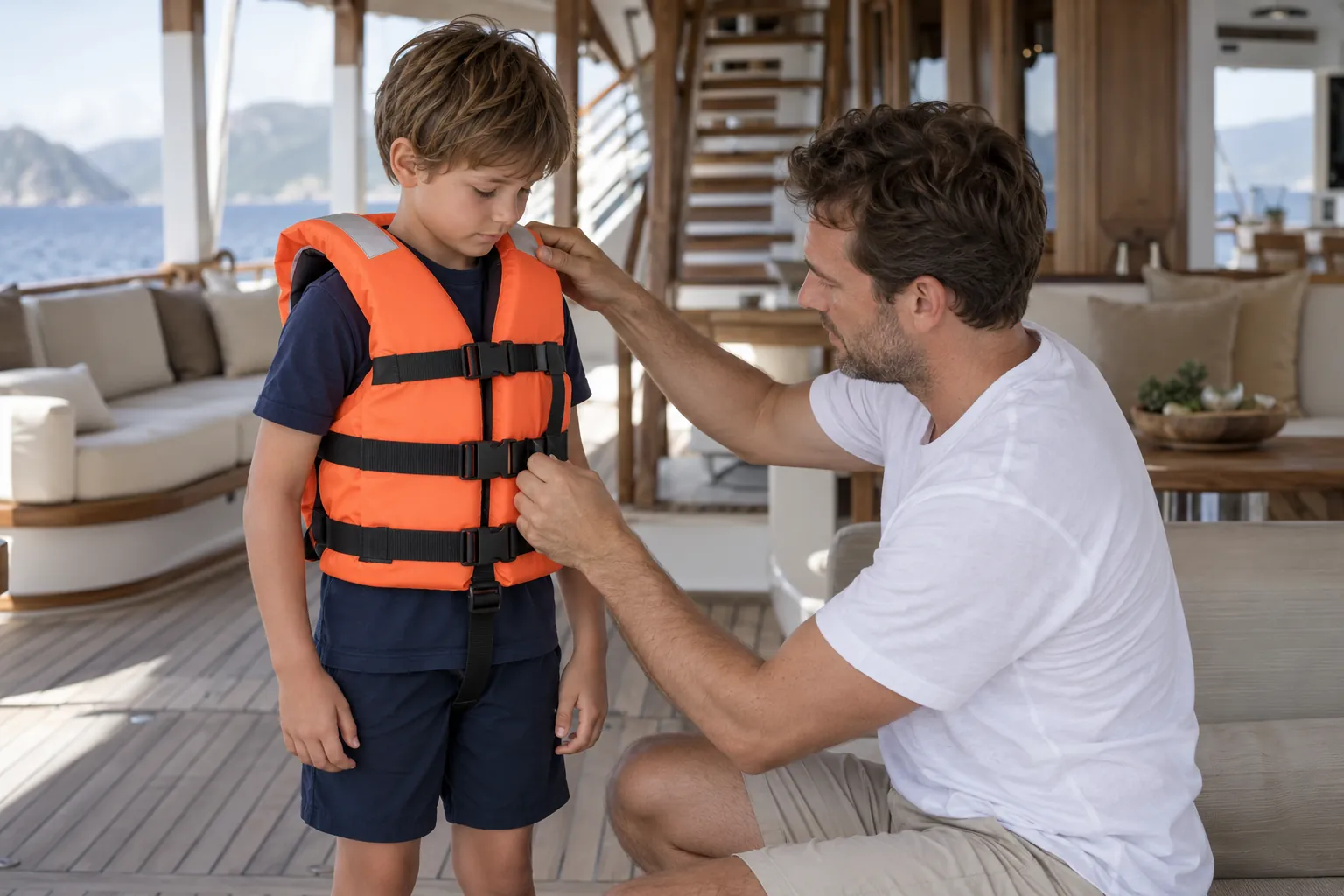
- Lifejackets: ask for the exact child sizes, weight ranges, condition and recognised approval standard. Check fit before departure; an adult jacket is not a substitute.
- Supervision: agree which adult watches each child. Ask separately about crew assistance and in-water guiding.
- Deck and stairs: confirm shade, railings, gaps, slippery surfaces and access between cabin and deck.
- Cabins: obtain the actual bed configuration, permitted occupancy, bathroom arrangement and proximity to parents.
- Meals: explain allergies and dietary needs in advance, including cross-contact concerns. Ask what the galley can reliably accommodate.
- Emergency response: ask about first-aid training, communications, nearest practical landing and evacuation arrangements.
- Costs: request an itemised family quote covering berths, meals, equipment, guides and park charges. Verify child pricing for your departure; do not assume a universal discount or exemption.
Cabin comfort and daily rhythm
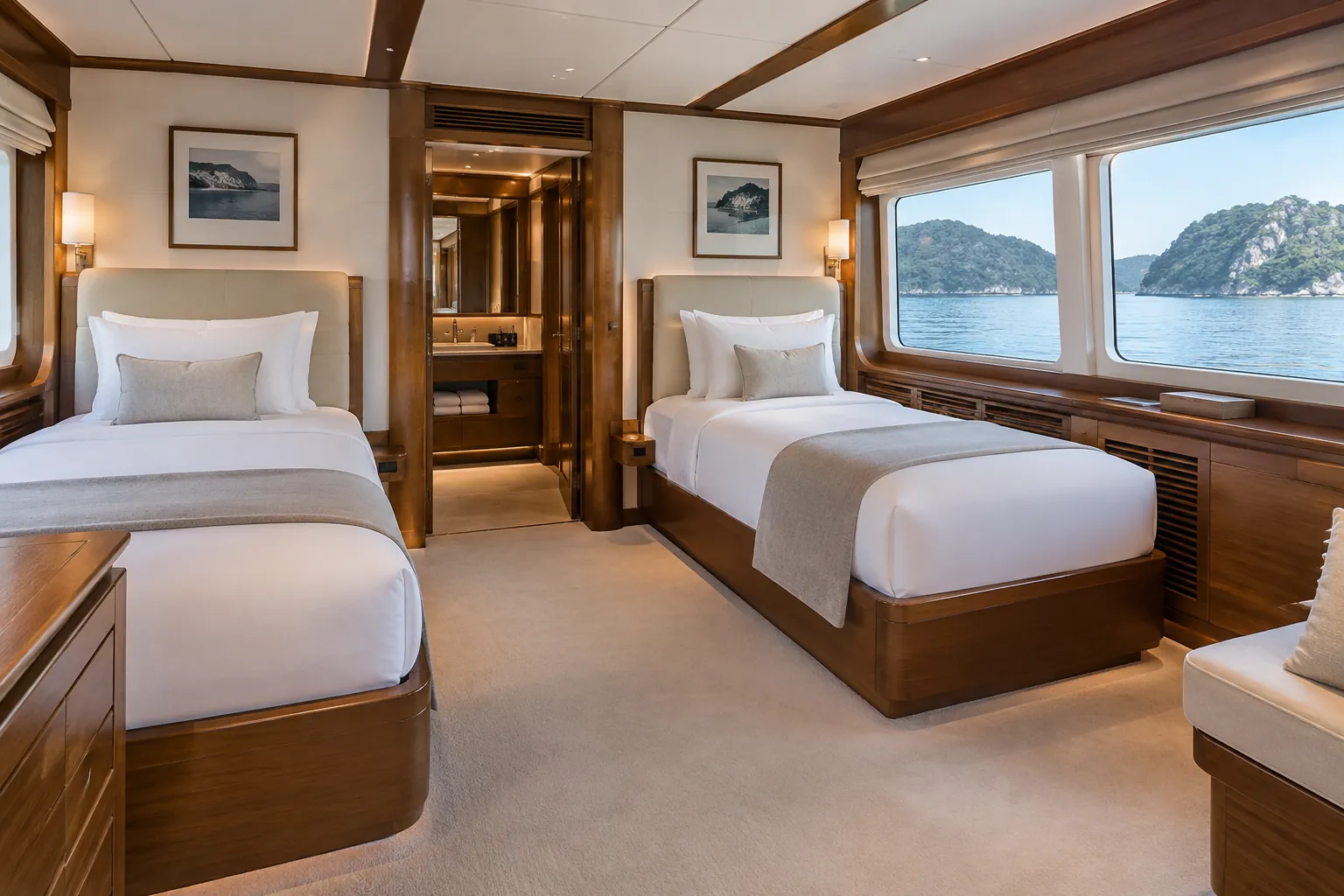
Ask for current photos and a layout of the cabin you would book, rather than judging it from the vessel’s best suite. Twin beds, extra berths and adjoining cabins are different arrangements; confirm occupancy and whether a child can safely reach an adult at night.
Build the day around manageable activities and breaks. Carry familiar snacks where permitted, drinking water and quiet entertainment. Mobile coverage can be unreliable. Request meals early enough for your child’s routine and avoid making every optional landing compulsory.
Plan for motion sickness
CDC guidance notes that susceptibility often peaks between ages seven and twelve. Looking toward the horizon and avoiding reading or screens while moving may help. Choose a safe, supervised place to rest and tell the crew early if a child feels unwell.
Ask a clinician about any medicine before travel: the child’s age, health and potential side effects matter. Do not improvise doses or share adult medication aboard. Weather and boat motion still vary despite preparation.
Dragon treks with children
Arrange the authorised naturalist-guided experience and tell the guide about your child’s needs before starting. Stay together, follow the instructed distance and group position, and never approach, feed, touch or pose beside a dragon. Prevent children from running off or leaving the trail.
Choose a shorter available route when appropriate and agree where an adult and child can wait if they turn back. A managed visit still involves wild animals; supervision does not make close contact safe. Our travel safety guide covers wider trip preparation.
Snorkelling is optional
A flotation aid does not make a non-swimmer ready for open-water snorkelling. Tell the operator about each child’s swimming ability before booking. The guide must assess the actual site, current, waves, entry, exit and rescue support on the day. Skipping the water is a valid choice.
The American Academy of Pediatrics advises properly fitted lifejackets when boating and close, attentive adult supervision around water. Inflatable toys and swimming aids are not replacements for an approved lifejacket. Assign a watching adult; never rely on equipment alone.
Pack for the planned activities
- Sun-protective clothing, suitable sunscreen and a hat for exposed time ashore.
- Closed shoes with grip for walks and well-fitting equipment for any agreed water activity.
- Prescribed medicines and child-specific first-aid supplies, discussed with a clinician.
- Water bottles, permitted familiar snacks and spare dry clothing.
- Quiet entertainment and a light if the confirmed itinerary includes a pre-dawn activity.
Use our Komodo packing guide alongside the operator’s departure checklist.
Frequently asked questions
What is the minimum age?
It depends on the operator, vessel and activity. Get the specific policy in writing and assess your child’s needs separately from the minimum allowed age.
Can children do the Padar sunrise trek?
Ask about the current route, footing, length and low-light boarding. Fitness, heat tolerance and willingness to follow instructions matter. Confirm a safe alternative before committing.
Is a hotel-based trip better?
A hotel provides a fixed base and easier rest days; boat excursions still involve transfers and time offshore. A liveaboard avoids returning to town each night but commits the family to more time aboard. Compare the actual schedules.
Does luxury mean child-safe?
No. Premium cabins and service do not establish suitable railings, lifejacket fit, supervision or emergency readiness. Verify those details for the exact boat.
Plan the departure around your family
Compare Komodo tour formats, then ask the operator to confirm the boat, cabin, activities and support for your group. Check the current park fee breakdown against your itemised quote.
Make the itinerary work when a child opts out
A family plan should have a named adult with each child during swimming, boarding and wildlife walks. If a child dislikes a tender or an exposed trail, clarify who remains aboard and whether the rest of the group can continue. A private boat may make a slower morning possible, but it does not override a ranger’s instructions, tide conditions or crew judgment. Ask about washroom access, a shaded rest area and drinking water for the exact vessel.
| Family decision | Question to settle before deposit |
|---|---|
| Young child unable to walk a full trek | Is a shorter authorized route available for that date, or can the child stay aboard with a responsible adult? |
| Child needs a small lifejacket | Which size and rating is on the named boat, and may we bring one that fits? |
| Sibling wants to snorkel; another does not | Can the non-swimmer remain aboard with supervision while the activity proceeds? |
| Shared cabin sleeps fewer than the family size | What actual bed allocation and adult access are confirmed? |
There is no single park-wide age threshold that makes every family trip suitable. Some tour operators impose their own age rules. The park’s published visitor protocol focuses on guide instructions and wildlife distance, while each boat has its own physical layout. Get both sets of requirements in writing. Avoid age-based “safe at five” promises from generic guides. For sea conditions, consult BMKG’s maritime destination forecast close to travel and follow the crew’s decision.
Pack any child’s usual needs with the activity plan, then separately verify any medication advice with their clinician. Confirm the family price by passenger category and chargeable park day in the fee guide and operator quote; never assume a discount applies simply because a guest is a child.
Sources
