
Best Time to Visit Komodo National Park: A Month-by-Month Sailing Guide
The dry season runs April to October, with May to early October the strongest window for sailing Komodo. Here is what actually happens each month.
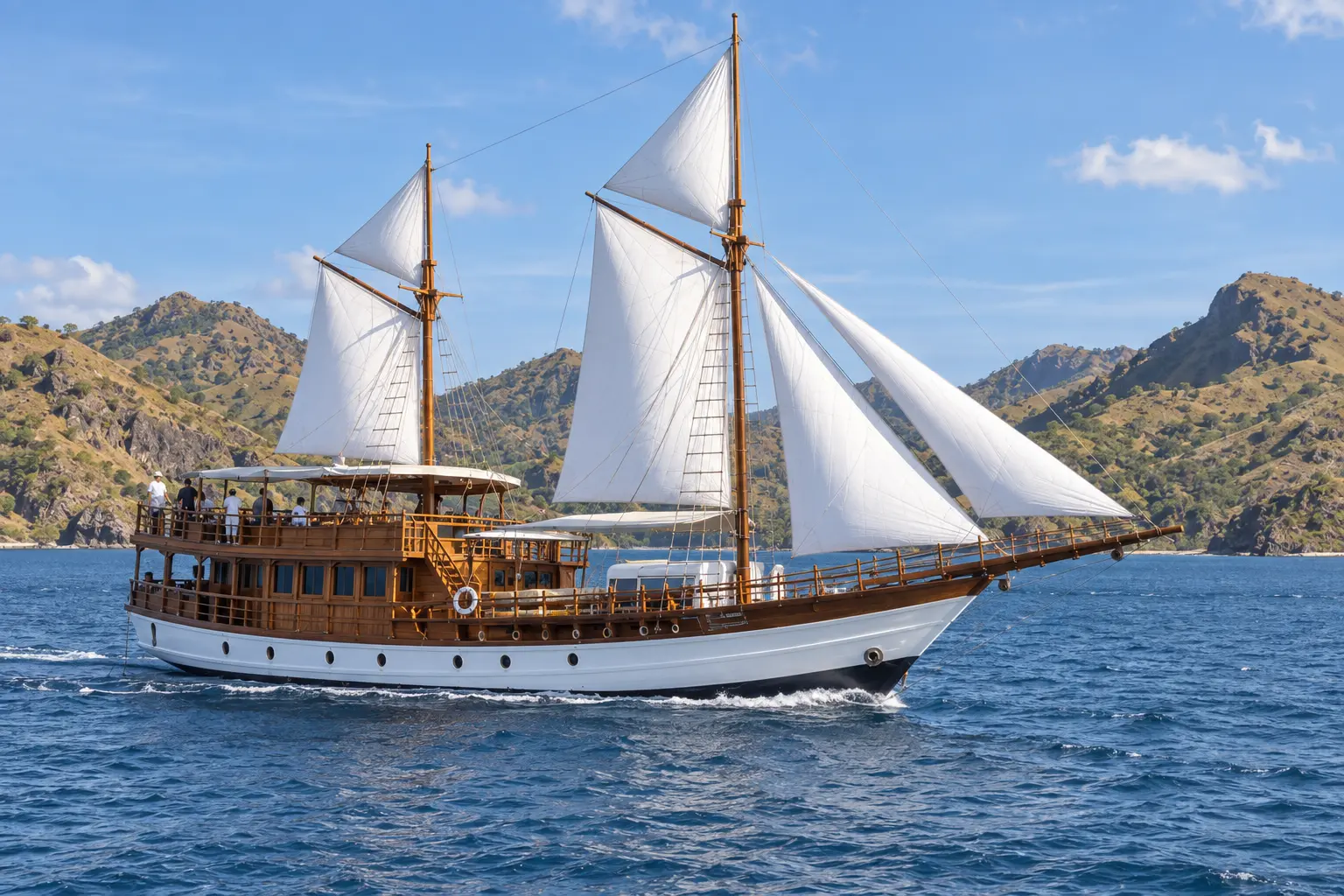
The best time to visit Komodo National Park for most first trips is the dry season, roughly April to October, when crossings are calmer and trails are dry. May, June and September balance good weather with fewer crowds than July and August. December to March brings the largest manta aggregations but also the highest risk of weather closures: in January 2026, tourist sailings into the park were suspended for most of the month.
Editorial review: 24 September 2026. This is a qualitative planning calendar, not a measured multi-year rain or wave dataset. BMKG’s short-range maritime forecast, the park’s availability and the vessel’s operating decision take precedence for any specific day.
Best time to visit Komodo for what you want to do
| Your goal | Best window | Why |
|---|---|---|
| A first trip with the classic stops | May, June or September | Dry-season weather with fewer crowds than July and August |
| Komodo dragon treks | April to October | Dry trails and cooler early mornings; mating activity is highest around June to August |
| Baby Komodo dragons | Around April and May | Eggs laid in the dry season hatch around April or May, and the young live in trees |
| Manta rays at Karang Makassar | December to March | Plankton-rich water brings the largest aggregations to the cleaning station |
| Diving the south of the park | Ask for a site-specific plan | Upwelling cools southern water in the dry season, so conditions differ north to south |
| Green hills on Padar | April and May | The hills are still green after the rains |
| Fewer crowds and lower prices | Late November to March, outside Christmas and New Year | Quieter and often cheaper, but closures are most likely from late December to February |
The table is a starting point, not a guarantee. Wildlife moves, and a dry-season month can still bring a windy week. For the manta season in detail, see our Manta Point guide; for the dragons, our Komodo dragon facts and Rinca Island guide explain what a trek involves. Our Komodo One Day Tour and Komodo Tour 2 Days 1 Night both visit Rinca and Komodo Island, which helps in any season.
How to use this month-by-month Komodo guide
First decide whether your dates are flexible. Then ask where the boat will sail: sheltered channels near Labuan Bajo are not the same exposure as a longer passage. Finally ask about departure times, park registration and the captain’s weather-change policy. A seasonal label can help choose a month but cannot certify a specific sea state. BMKG publishes separate information for Labuan Bajo harbour, Labuan Bajo waters and tourism locations such as Padar and Rinca; check the relevant location, not a generic city forecast.
Komodo weather and sailing, month by month
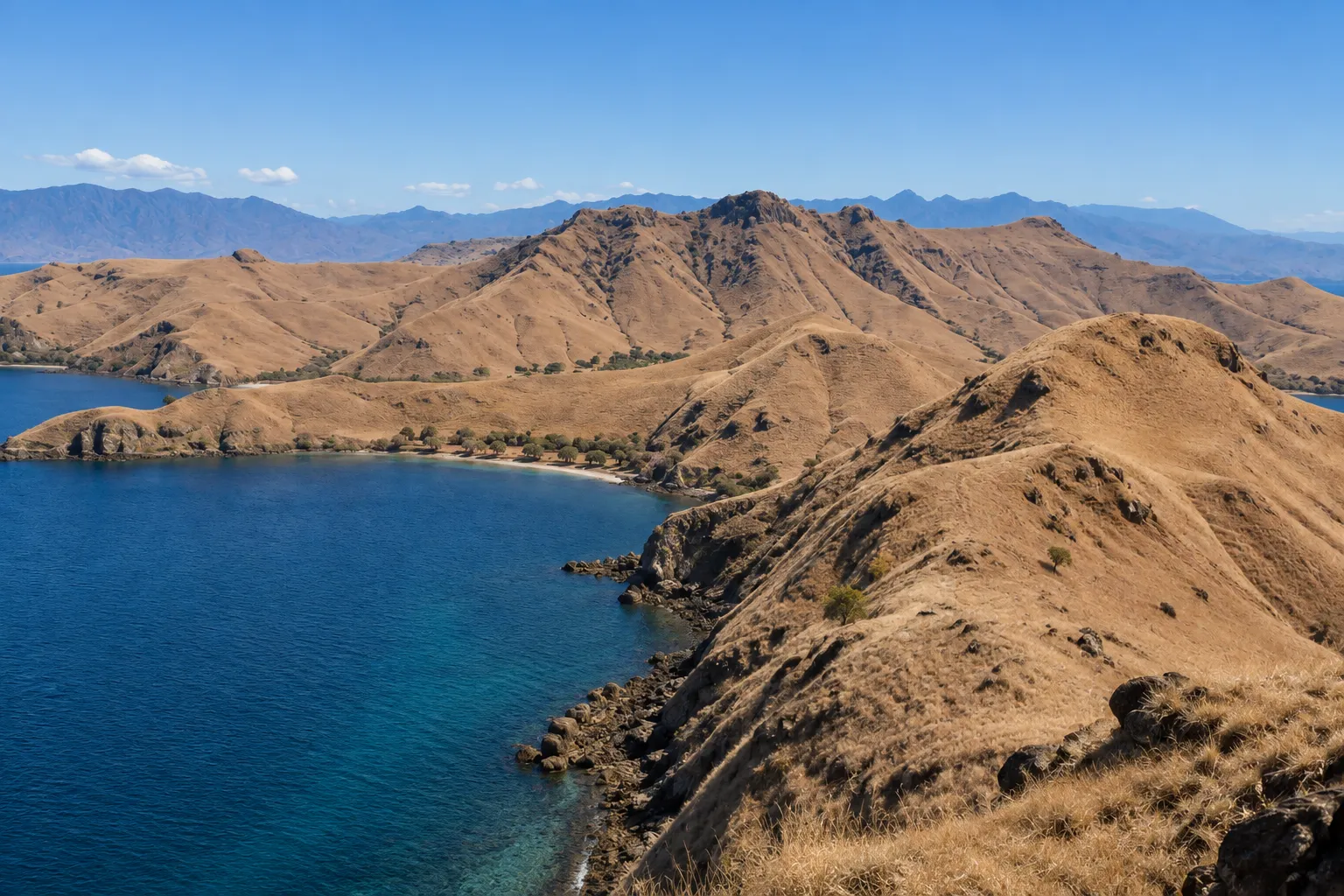
| Month | Useful planning expectation | Trade-off and check |
|---|---|---|
| January | Wet-season conditions can make exposed legs more changeable; hills may be green. | Allow a route alternative and check current maritime warnings; in 2026, tourist sailings were suspended for most of the month. |
| February | Often one of the more weather-sensitive months for a fixed sailing plan. | Do not equate a cheap quote with a dependable departure; check the terms. |
| March | Transition toward drier conditions varies by year. | Do not assume the sea settles on a calendar date; examine the near-term forecast. |
| April | Early dry-season planning with greener scenery after rain. | Verify the actual boat’s route and visitor access. |
| May | A useful balance for many first-time visitors who want time ashore and on the water. | Weather remains variable; secure named dates and cabins. |
| June | Often drier, with more demand as holiday travel grows. | Check your preferred departure, cabin and park visit separately. |
| July | Popular dry-season travel window. | More demand does not mean every sea leg is calm; watch wind and site conditions. |
| August | Another popular dry-season month, with dry-looking hills. | Compare exact prices and inventory instead of assuming a universal peak surcharge. |
| September | Often attractive to travelers who want dry-season conditions after major holidays. | Ask for the current route and any wind-related alternatives. |
| October | Late dry-season option; landscape may be especially dry. | Rain timing varies between years and routes. |
| November | Transition month: weather and pricing are less predictable. | Choose flexibility over a promise that every remote stop is accessible. |
| December | Wet-season influence returns; holiday dates can be busy. | Separate early-month dates from Christmas and New Year; check live stock. |
The table is a qualitative monthly decision aid. It does not rank measured rainfall, visibility or nightly boat prices. Those require a stated station, period, route and fare sample. Competitor calendars that label an entire month “calm” or “roughest” can hide week-to-week changes and the different conditions experienced on different legs.
Rain, wind and waves answer different questions
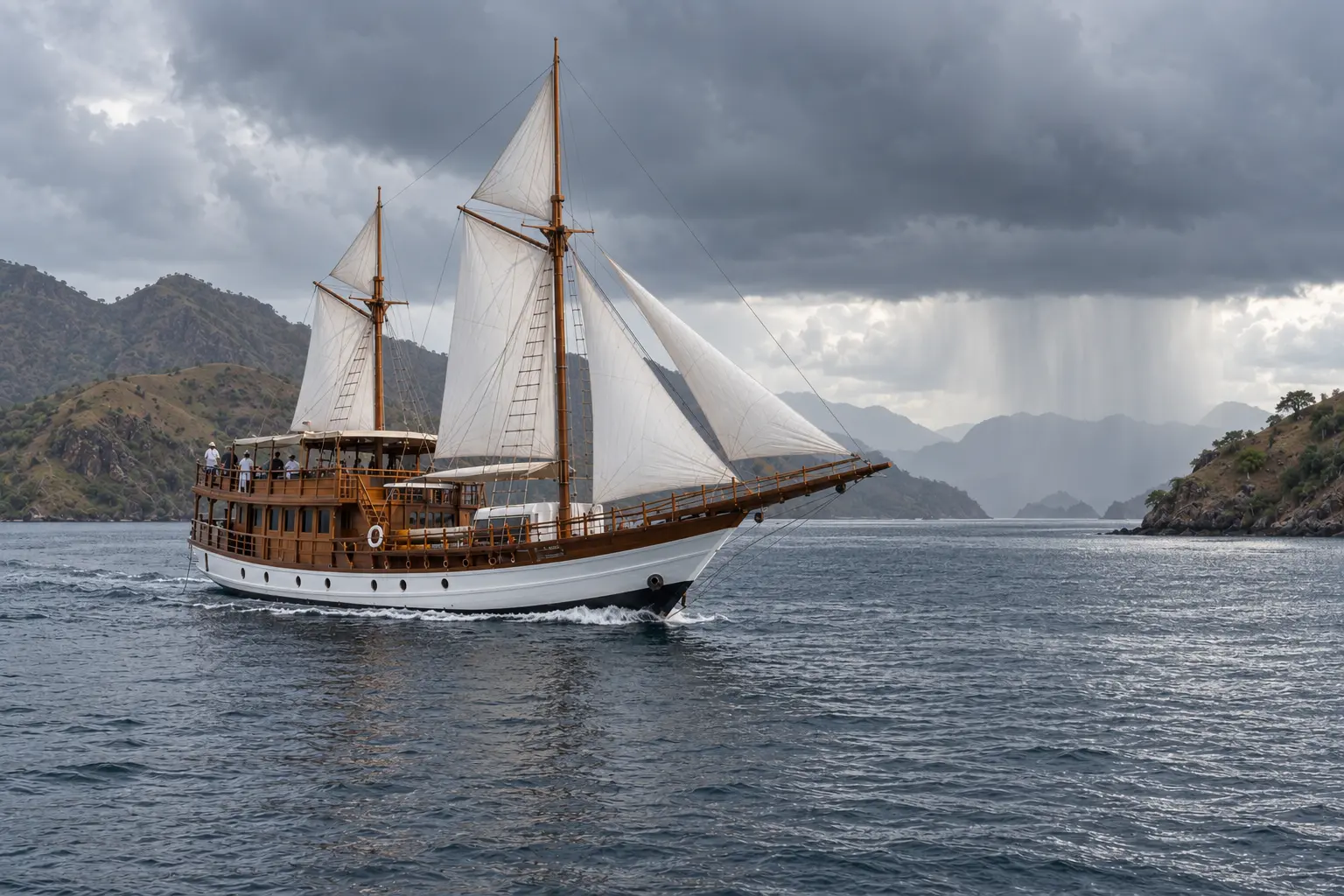
A rain icon in Labuan Bajo does not by itself decide whether a Komodo boat sails. Check wind and wave forecast for the waters the boat crosses, ask whether the planned activities are in sheltered or exposed places, and follow the competent maritime authority and captain’s decision. A guest may tolerate a wet ranger walk while a crossing is still inappropriate, or enjoy sun on shore while wind affects the boat.
Ask the operator: Which of our planned legs is most weather-sensitive? Are there safe alternate anchorages? What is the return plan if the chosen destination is unavailable? What happens to prepaid extras? A longer trip gives more scheduling options, but does not guarantee a particular island, snorkel site or extra day of activities. Our trip duration guide explains how usable sailing time changes the itinerary.
Wet-season closures: what happened in January 2026
The wet season is not only about rain showers. After the tourist boat KM Putri Sakinah sank in the waters off Padar on 26 December 2025, the harbourmaster in Labuan Bajo (KSOP) stopped issuing sailing permits to tourist boats, including speedboats, on the strength of BMKG extreme-weather warnings. The first notice came on 29 December 2025, and eight successive notices kept tourist sailings suspended through January. The park authority also suspended nature-tourism services, and the closure was eventually extended to 1 February 2026.
Many trips booked for that period were cancelled, and local reporting described disputes over refunds because boat operators, tour agents and hotels applied different rules. If your dates fall between late December and February:
- Build in flexible dates or extra days in Labuan Bajo.
- Get the operator’s weather-cancellation and refund terms in writing before paying.
- Check that your travel insurance covers cancellations ordered by the port authority.
- Watch KSOP and BMKG notices in the week before departure.
Wildlife: avoid a promise tied to a date
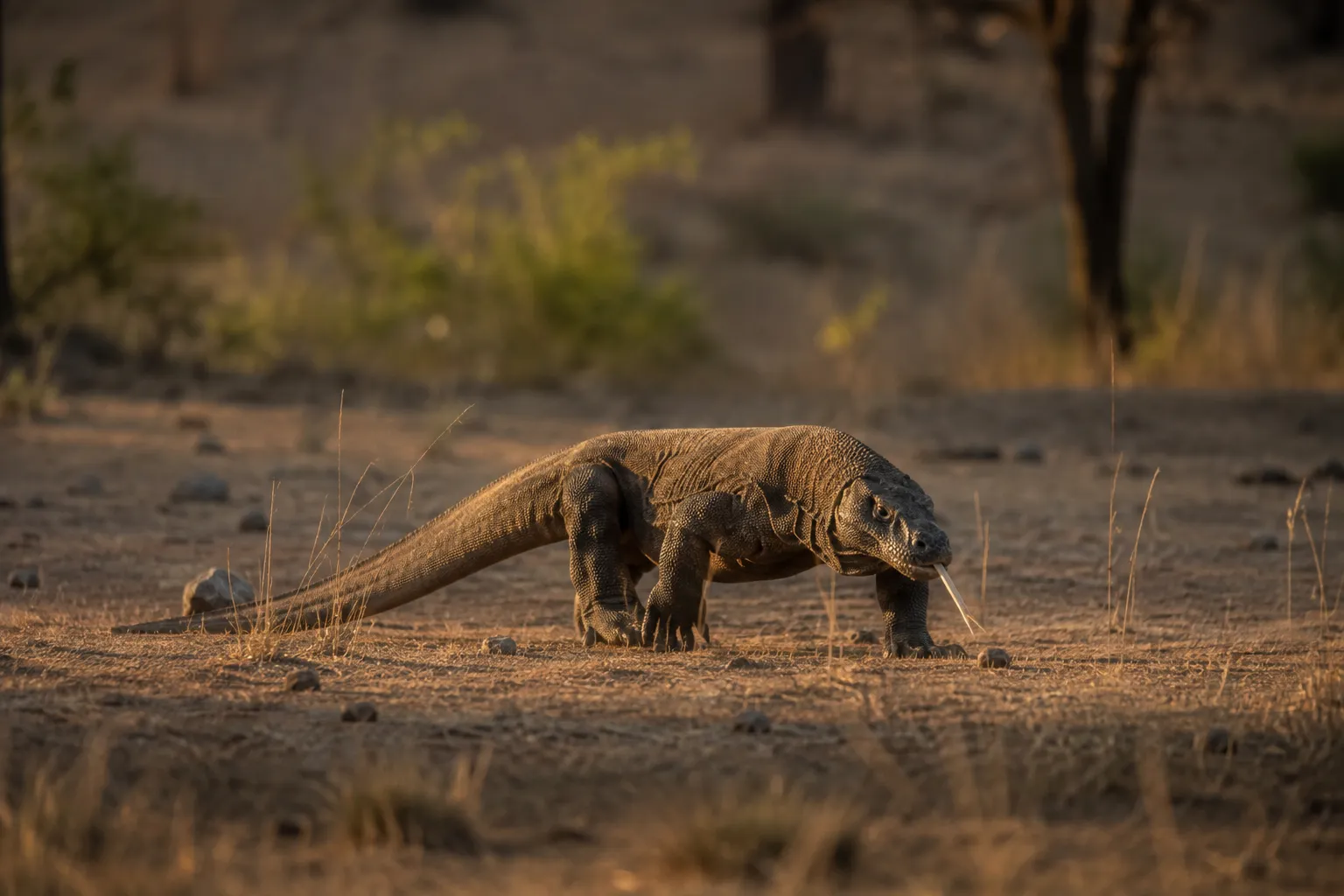

Komodo dragons are wild animals; ranger guidance and the permitted route determine an encounter, not the month on its own. Mantas move between feeding and cleaning areas and sightings change with ocean conditions. A published scientific study used photographic identification to investigate manta movement and site use in the Komodo area; that is a better reason to treat one beach or one month as uncertain than to promise a guaranteed encounter. Whale sharks should be regarded as opportunistic sightings, not a seasonal itinerary item without robust local records. The destination’s Manta Point guide gives site context without turning observations into a guarantee.
For diving, do not let a broad weather calendar override site-specific currents, visibility and the dive operator’s assessment. A traveler whose main goal is underwater conditions should ask the dive operator about the actual north, central or south itinerary and expected conditions for their certification and comfort.
Pick a month by the decision you control
| Traveler priority | Starting window | Check before paying |
|---|---|---|
| Green hills and a first overnight trip | April or May | Recent rain pattern and boat’s actual departure. |
| Dry trails and wider date choice | May to October | Cabin and park availability plus current wind forecast. |
| Fewer scheduling commitments | Shoulder months | Written weather-change terms and land buffer. |
| Fixed school-holiday dates | Your available dates | Named vessel, confirmed cabin, visitor reservation and flights. |
| Manta or dive focus | Operator’s site-specific window | Current dive plan and responsible guide; no wildlife guarantee. |
For a first overnight route, start with a komodo tour 3 days 2 nights and request the actual departure, vessel, cabin and route for your chosen month. A product page helps compare; only a date-specific confirmation tells you what is held.
Season is not the park booking rule
In a 15 April 2026 release, Indonesia’s Ministry of Forestry said a 1,000-person daily visitor quota had applied from 1 April and described an annual capacity of about 365,000. A later Ministry release said that capacity is reviewed adaptively. This is not a guarantee of a free slot or evidence that every summer date sells out. For your visit, ask whether the operator registers you through the park’s SiOra process and what confirmation you will receive. The permit booking guide covers who does what.
Seven days before a sailing: the useful refresh
- Ask the operator to reconfirm its named vessel, cabin and precise boarding time.
- Confirm the park visit status, intended islands and what happens if a route changes.
- Look at BMKG’s maritime forecasts for the relevant water and destination; refresh again close to departure.
- Keep a land buffer if a missed sailing or late return would break your flight plan.
- Save the invoice, e-ticket and operator contact offline; cellular data may be intermittent at sea.
Frequently asked questions
What is the best month to visit Komodo?
For most first trips, May, June or September. They sit in the dry season with calmer crossings and fewer crowds than July and August. Your booked boat’s route and the short-range forecast still decide the day.
When is manta season in Komodo?
Mantas are seen year-round, but the largest aggregations at Karang Makassar usually come from December to March, when plankton-rich water draws them in to feed.
When is the rainy season in Komodo?
Roughly December to March, with November as a transition month. The highest risk of weather-related sailing suspensions is from late December to February.
Can I visit Komodo in the rainy season?
Yes, many days run normally, but build in flexibility. In January 2026 tourist sailings into the park were suspended for most of the month on weather warnings.
When can you see baby Komodo dragons?
Hatchlings emerge around April and May and spend their first months in trees. Sightings are possible but never guaranteed.
Is July guaranteed to be calm?
No. Dry-season patterns do not certify the wind, waves or currents on a particular date.
When should I book a Komodo trip?
Earlier if your dates or cabin choice are fixed, especially for July and August. Ask for a named, confirmed departure and park access; no single lead time fits every boat.
Sources and method
- BMKG maritime tourism forecast and its location-specific harbor/waters pages: short-range operational checks, not multi-year monthly averages.
- Ministry of Forestry, 15 April 2026 and 24 April 2026: quota and review.
- PeerJ research on Komodo manta movement: wildlife site use; no guaranteed season claim is derived from it. A measured multi-year weather or vessel cancellation series has not been supplied for this draft.
- Kompas, 31 January 2026: sequence of KSOP sailing suspensions after 26 December 2025 and refund disputes.
- Directorate General KSDAE: park tourism closure extended to 1 February 2026.
- Encyclopaedia Britannica: Komodo dragon nesting and hatching season.
